
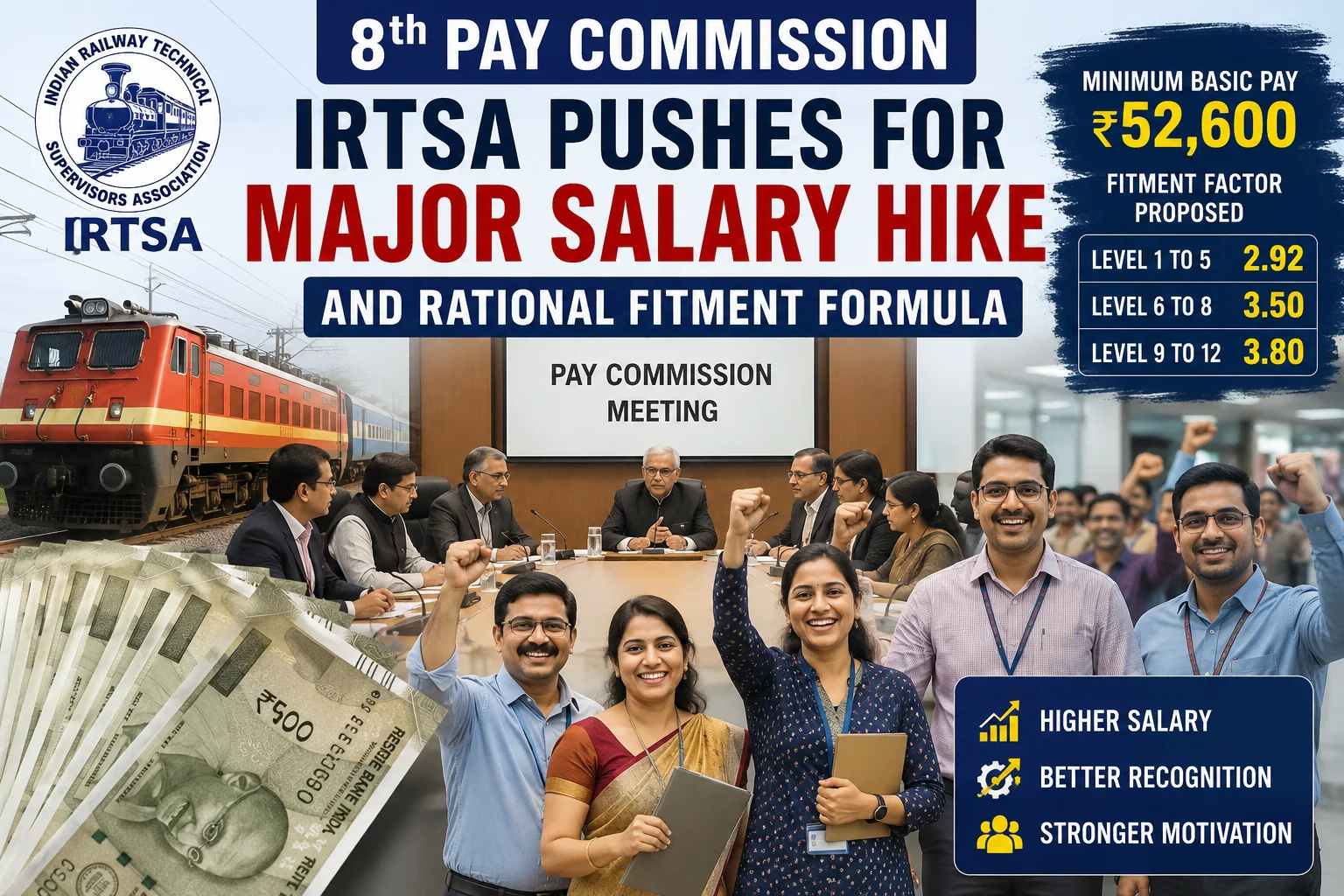
As discussions around the 8th Pay Commission continue to gain momentum, the Indian Railway Technical Supervisors Association (IRTSA) has stepped forward with strong demands for a substantial salary revision and a more rational fitment formula for central government employees. The association, which represents a large section of railway technical supervisors, believes that the upcoming pay commission should address long-standing concerns regarding salary disparities, rising living costs, and career progression.
According to employee representatives, inflation and increasing household expenses have significantly affected the financial condition of government employees over the last few years. They argue that the 8th Pay Commission offers an important opportunity to create a fair and balanced pay structure that reflects present-day economic realities. As a result, IRTSA has urged policymakers to consider a fitment formula that provides meaningful financial benefits across all pay levels.
Why the Fitment Formula Matters So Much
One of the key issues raised by IRTSA is the fitment factor, which plays a crucial role in determining revised salaries and pensions. The fitment factor is essentially a multiplier used to calculate new basic pay from the existing salary structure. Any change in this factor directly impacts take-home salary, retirement benefits, and pension calculations.
Employee unions have often argued that previous pay revisions did not fully compensate for inflation and rising living standards. Therefore, many organizations are demanding a higher fitment factor under the 8th Pay Commission. A stronger fitment formula could provide a significant boost to salaries while ensuring that employees maintain their purchasing power.
The association believes that a scientific and transparent approach should be adopted while deciding the fitment factor so that employees across different grades receive equitable benefits.
Major Salary Hike Proposed by Employee Representatives
The demand for a substantial salary increase has become one of the most discussed topics among government employees. IRTSA has reportedly emphasized the need for a salary structure that reflects current economic conditions and the growing responsibilities of railway staff.
Many employee groups believe that a higher fitment factor would help bridge the gap between existing salaries and actual living expenses. Technical supervisors, in particular, argue that their roles involve significant responsibilities related to safety, maintenance, and operational efficiency, making better compensation necessary.
Below is a projected illustration often discussed in employee circles regarding possible salary revisions under a higher fitment factor:
| Current Basic Pay | Projected Basic Pay |
|---|---|
| ₹18,000 | ₹51,480 |
| ₹25,500 | ₹72,930 |
| ₹35,400 | ₹1,01,244 |
| ₹44,900 | ₹1,28,414 |
| ₹56,100 | ₹1,60,446 |
These figures are only projections and should not be considered official recommendations.
Pensioners Could Also Benefit from Revised Formula
The discussion surrounding the 8th Pay Commission is not limited to serving employees. Pensioners are also closely monitoring developments because any revision in the fitment formula is expected to impact pension calculations.
Retired railway employees often depend heavily on their monthly pension income. With healthcare costs and living expenses increasing steadily, many pensioners believe that a meaningful revision is necessary. Employee associations have therefore called for a pension structure that remains linked to salary revisions and ensures fair treatment for retirees.
Experts suggest that a higher fitment factor could result in a significant increase in pension benefits, helping retired employees maintain financial stability during retirement.
Key Demands Raised by IRTSA
Apart from salary increases, the association has highlighted several areas that it believes require attention under the new pay commission framework. These demands focus on creating a more balanced and employee-friendly compensation system.
Some of the major demands include:
- A higher and rational fitment factor
- Better salary progression across pay levels
- Reduction in pay anomalies
- Improved pension benefits
- Fair treatment for technical supervisors
- Salary structures that reflect inflation and economic growth
Employee representatives argue that these reforms would not only improve morale but also enhance productivity and efficiency within government departments.
Expectations Continue to Build Before Final Recommendations
With discussions around the 8th Pay Commission gaining pace, expectations among railway employees and pensioners continue to rise. Organizations like IRTSA believe that the upcoming commission should focus on fairness, transparency, and long-term financial security for government staff.
While no official recommendations have been announced yet, the growing demand for a major salary hike and a rational fitment formula highlights the concerns shared by millions of employees across the country. The final recommendations will likely be closely watched because they have the potential to shape the financial future of both serving employees and retirees for years to come.
FAQs
1. What is IRTSA?
IRTSA stands for the Indian Railway Technical Supervisors Association, which represents railway technical supervisors and works on issues related to employee welfare and service conditions.
2. Why is the fitment factor important in the 8th Pay Commission?
The fitment factor is used to calculate revised basic pay and pension. A higher fitment factor generally results in increased salaries and retirement benefits.
3. Will pensioners benefit from the 8th Pay Commission?
Yes, pensioners are expected to benefit if the revised pay structure includes higher fitment factors and improved pension calculations.